Precision Mechanical Polishing Services Green Bay
Rotary wheel, belt, buffing, lapping, and CMP operations for general surface refinement and semiconductor / optical substrates.
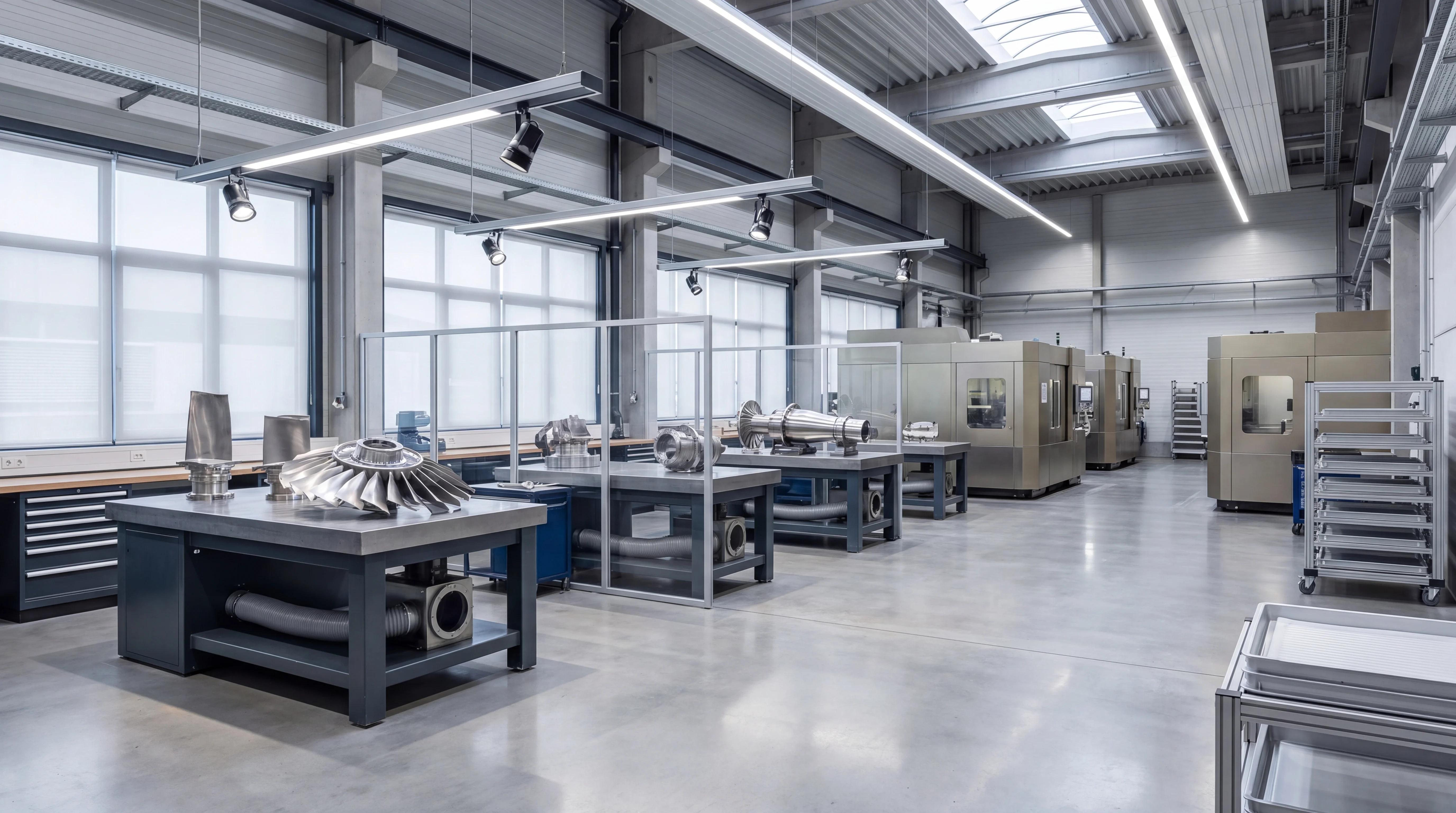
Mechanical Polishing: Methods Covered
Each method below has its own acceptance criteria and finishing equipment. The intake directs the part to the finishing facility with the appropriate method and accreditation.
Chemical-Mechanical Polishing (CMP)
Chemical-mechanical polishing (CMP) is executed by introducing a precisely formulated, abrasive-laden chemical slurry between a compliant polishing pad and the targeted workpiece. This advanced hybrid methodology simultaneously leverages chemical surface oxidation to soften the substrate material and mechanical abrasion to remove it. Such synergistic action enables extreme planarization and sub-nanometer surface finishes that cannot be achieved through conventional mechanical polishing alone. The process parameters - including downforce, platen speed, and slurry chemistry - are rigorously controlled to mitigate subsurface damage, a critical requirement for silicon wafers, precision optics, and extreme sealing surfaces. By systematically balancing chemical reactivity with mechanical friction, surface finishes are routinely driven into the single-digit angstrom range.
When absolute precision and defect-free mirror finishes are mandated by engineering specifications, CMP is deployed to meet stringent tolerances. Typical process outcomes and control metrics include:
- Reduction of surface roughness (Ra) and root-mean-square (RMS) variations to sub-nanometer thresholds, verified by high-resolution interferometry.
- Correction of localized topographical irregularities to achieve global planarization and strict optical flatness.
- Elimination of scratch-dig defects in strict alignment with ISO 10110 surface imperfection standards.
- Preservation of tight parallelism and thickness uniformity across large-diameter technical substrates.
- Complete removal of residual mechanical stress layers induced by preceding lapping or grinding operations.
Additional Techniques and Variants
Specialized variants and adjacent techniques available on engineering review. Click an entry for a short description.
Rotary Polishing (Wheel/Belt Machines)
Rotary Polishing (Wheel/Belt Machines) is supported as a variant of mechanical polishing work for Green Bay-area parts. Acceptance criteria, abrasive grade, and process control points are confirmed against the customer specification at intake.
Belt Polishing / Abrasive Belt Grinding
Belt Polishing / Abrasive Belt Grinding is supported as a variant of mechanical polishing work for Green Bay-area parts. Acceptance criteria, abrasive grade, and process control points are confirmed against the customer specification at intake.
Buffing (Cloth/Soft Wheel With Polishing Compound)
Buffing (Cloth/Soft Wheel With Polishing Compound) is supported as a variant of mechanical polishing work for Green Bay-area parts. Acceptance criteria, abrasive grade, and process control points are confirmed against the customer specification at intake.
Mechanical Lapping
Mechanical Lapping is supported as a variant of mechanical polishing work for Green Bay-area parts. Acceptance criteria, abrasive grade, and process control points are confirmed against the customer specification at intake.
Sandpaper / Abrasive Disc Polishing
Sandpaper / Abrasive Disc Polishing is supported as a variant of mechanical polishing work for Green Bay-area parts. Acceptance criteria, abrasive grade, and process control points are confirmed against the customer specification at intake.
How a Green Bay Mechanical Polishing Job Runs
Intake
Material, geometry, target Ra or finish standard, quantity, and ship-back address captured in the form above.
Engineering Review
Method, abrasive grade, and acceptance criteria are confirmed against the spec by the finishing facility before parts ship.
Controlled Processing
Mechanical Polishing is performed at an accredited shop with in-process profilometer checks to prevent over-polishing.
QA and Return
Final Ra, flatness, and (where specified) passivation are logged. Parts are cleaned and returned to Green Bay on a logged carrier.
In-Depth Reference for Green Bay
Local Industrial Demand for Mechanical Polishing in Green Bay
The dense industrial infrastructure localized along the Fox River and the interstate corridors of Green Bay, Wisconsin, drives a persistent requirement for precise mechanical polishing services. Brown County has historically operated as a primary hub for the North American pulp, paper, and tissue manufacturing sectors. Within these heavy industrial environments, continuous-production equipment is subjected to severe abrasive wear and chemical exposure. Massive calendar rolls, slitter anvils, and web-guide cylinders utilized in local paper mills must maintain strict dimensional profiles and specific surface energy characteristics to prevent fiber accumulation or catastrophic web breaks during high-speed operation. The concentration of these large-scale conversion facilities in areas such as the I-43 Business Center and near the Port of Green Bay necessitates robust surface refinement programs. Mechanical polishing is deployed to systematically remove surface defects, thermal fatigue cracking, and oxidized layers from critical rotational components. By restoring these geometries locally, Fox Valley manufacturers mitigate extended downtime and avoid the complex logistics associated with transporting multi-ton rollers out of the region for mechanical refurbishment.
Beyond the forestry products sector, Green Bay sustains a massive food processing and dairy manufacturing footprint that mandates stringent surface conditioning protocols. Facilities processing cheese, bulk dairy fluids, and packaged meats - many situated near the Ashwaubenon industrial zones and the East Side - rely heavily on sanitary-grade stainless steel infrastructure. Bulk fermentation vats, high-temperature short-time (HTST) pasteurization plates, and complex continuous-flow piping systems require mechanical polishing to eliminate micro-porosity, weld discoloration, and microscopic pitting. These surface imperfections serve as harborage points for bacterial biofilms and accelerate localized crevice corrosion during aggressive clean-in-place (CIP) sanitation cycles. Furthermore, the region supports active maritime operations and commercial shipbuilding support along the bay. Marine propulsion shafts, hydrodynamic impellers, and heavy winch drums require multi-stage abrasive processing to achieve defined dimensional tolerances and surface integrities. This mechanical refinement is critical for ensuring optimal seal seating and maximizing the efficacy of subsequent protective marine coatings applied within local shipyard environments.
Technical Standards and Compliance Frameworks
Execution of mechanical polishing within the Green Bay food and dairy processing sectors is governed by rigid surface metrology standards and specific regulatory compliance frameworks. Finishing procedures applied to product-contact surfaces must strictly align with 3-A Sanitary Standards and the hygienic design criteria outlined in FDA 21 CFR Part 117. Attaining these critical sanitary thresholds requires a controlled, multi-stage abrasive progression, systematically stepping down through abrasive grit sequences to achieve a maximum surface roughness of 32 microinches (0.8 micrometers) Ra. For highly sensitive applications within the region, specifications frequently demand finishes of 15 microinches Ra or lower, necessitating advanced mechanical buffing to yield a non-porous, highly refined finish. Surface texture verification is conducted utilizing tactile profilometers in accordance with ASME B46.1 methodology. This standard dictates precise parameters for stylus tip radius, traversing length, and roughness cut-off wavelengths to ensure highly repeatable measurements. Strict adherence to these quantifiable metrology protocols ensures that all polished components meet the stringent acceptance criteria established by facility quality assurance personnel and third-party sanitation inspectors.
In heavy industrial and marine applications, maintaining compliance requires precise control over stock removal rates, residual stress generation, and abrasive media selection. Polishing specifications for high-load carbon steel or specialized alloy components dictate strict adherence to designated material removal parameters to prevent surface embrittlement or the introduction of uncontrolled thermal gradients. Mechanical polishing procedures must be systematically documented to ensure complete traceability of the abrasive compounds and the mechanical application methods utilized. Standardized operational frameworks for mechanical surface refinement mandate several critical control points:
- Utilization of segregated abrasive media to strictly prevent cross-contamination between ferrous and non-ferrous substrates during active material removal.
- Calibration of surface roughness testers traceable to NIST standards, conforming to ISO/IEC 17025 requirements for dimensional and surface metrology.
- Adherence to ASTM A380 guidelines regarding the mechanical descaling and surface preparation of stainless steel alloys.
- Documentation of pre-polishing and post-polishing wall thicknesses to ensure continuous compliance with ASME Boiler and Pressure Vessel Code (BPVC) dimensional tolerances.
The integration of continuous profile monitoring during the mechanical reduction phases ensures that the final geometry remains firmly within the specified dimensional envelope. By maintaining these rigorous engineering tolerances and traceability requirements, mechanical polishing operations support the long-term functional reliability and regulatory compliance of Green Bay's diverse manufacturing and processing ecosystems.