Precision Mechanical Polishing Services Illinois
Rotary wheel, belt, buffing, lapping, and CMP operations for general surface refinement and semiconductor / optical substrates.
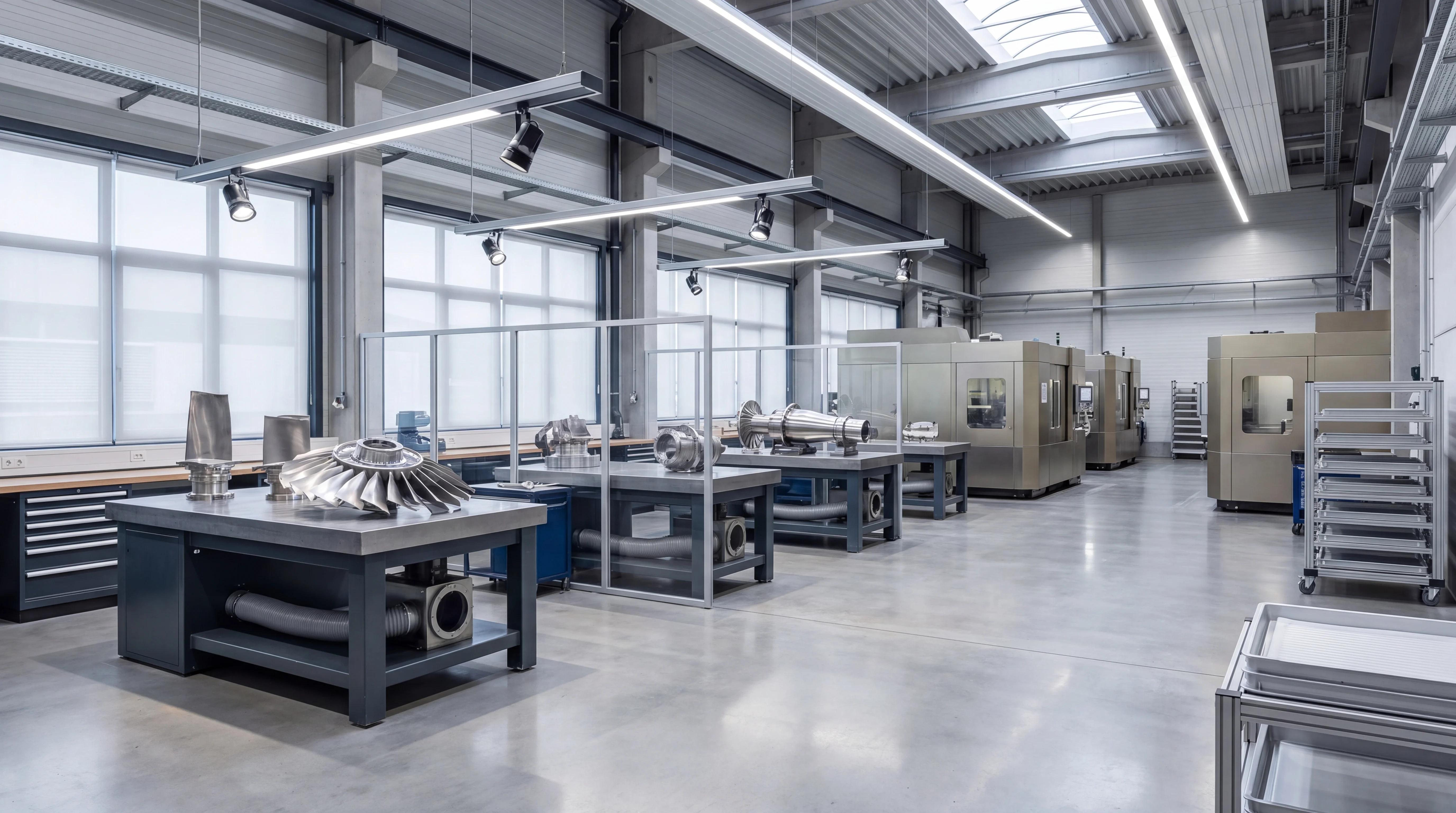
Mechanical Polishing: Methods Covered
Each method below has its own acceptance criteria and finishing equipment. The intake directs the part to the finishing facility with the appropriate method and accreditation.
Chemical-Mechanical Polishing (CMP)
Chemical-mechanical polishing (CMP) is executed by introducing a precisely formulated, abrasive-laden chemical slurry between a compliant polishing pad and the targeted workpiece. This advanced hybrid methodology simultaneously leverages chemical surface oxidation to soften the substrate material and mechanical abrasion to remove it. Such synergistic action enables extreme planarization and sub-nanometer surface finishes that cannot be achieved through conventional mechanical polishing alone. The process parameters - including downforce, platen speed, and slurry chemistry - are rigorously controlled to mitigate subsurface damage, a critical requirement for silicon wafers, precision optics, and extreme sealing surfaces. By systematically balancing chemical reactivity with mechanical friction, surface finishes are routinely driven into the single-digit angstrom range.
When absolute precision and defect-free mirror finishes are mandated by engineering specifications, CMP is deployed to meet stringent tolerances. Typical process outcomes and control metrics include:
- Reduction of surface roughness (Ra) and root-mean-square (RMS) variations to sub-nanometer thresholds, verified by high-resolution interferometry.
- Correction of localized topographical irregularities to achieve global planarization and strict optical flatness.
- Elimination of scratch-dig defects in strict alignment with ISO 10110 surface imperfection standards.
- Preservation of tight parallelism and thickness uniformity across large-diameter technical substrates.
- Complete removal of residual mechanical stress layers induced by preceding lapping or grinding operations.
Additional Techniques and Variants
Specialized variants and adjacent techniques available on engineering review. Click an entry for a short description.
Rotary Polishing (Wheel/Belt Machines)
Rotary Polishing (Wheel/Belt Machines) is supported as a variant of mechanical polishing work for Illinois-area parts. Acceptance criteria, abrasive grade, and process control points are confirmed against the customer specification at intake.
Belt Polishing / Abrasive Belt Grinding
Belt Polishing / Abrasive Belt Grinding is supported as a variant of mechanical polishing work for Illinois-area parts. Acceptance criteria, abrasive grade, and process control points are confirmed against the customer specification at intake.
Buffing (Cloth/Soft Wheel With Polishing Compound)
Buffing (Cloth/Soft Wheel With Polishing Compound) is supported as a variant of mechanical polishing work for Illinois-area parts. Acceptance criteria, abrasive grade, and process control points are confirmed against the customer specification at intake.
Mechanical Lapping
Mechanical Lapping is supported as a variant of mechanical polishing work for Illinois-area parts. Acceptance criteria, abrasive grade, and process control points are confirmed against the customer specification at intake.
Sandpaper / Abrasive Disc Polishing
Sandpaper / Abrasive Disc Polishing is supported as a variant of mechanical polishing work for Illinois-area parts. Acceptance criteria, abrasive grade, and process control points are confirmed against the customer specification at intake.
How an Illinois Mechanical Polishing Job Runs
Intake
Material, geometry, target Ra or finish standard, quantity, and ship-back address captured in the form above.
Engineering Review
Method, abrasive grade, and acceptance criteria are confirmed against the spec by the finishing facility before parts ship.
Controlled Processing
Mechanical Polishing is performed at an accredited shop with in-process profilometer checks to prevent over-polishing.
QA and Return
Final Ra, flatness, and (where specified) passivation are logged. Parts are cleaned and returned to Illinois on a logged carrier.
In-Depth Reference for Illinois
Industrial Demand for Mechanical Polishing Across Illinois
The industrial ecosystem across Illinois generates sustained demand for controlled mechanical polishing, primarily driven by the concentration of heavy machinery production, agricultural processing, and life sciences manufacturing. Within the heavy equipment manufacturing centers located in Peoria, Decatur, and the Quad Cities region, mechanical polishing is an operational necessity for critical drivetrain and hydraulic components. Massive excavation equipment and agricultural tractors rely on hydraulic cylinder rods, planetary gear assemblies, and actuation pistons that require meticulous surface refinement. The mechanical polishing process removes microscopic turning or grinding marks left by primary machining operations, yielding a precisely controlled surface texture. This engineered topography retains necessary lubrication layers while preventing premature degradation of high-pressure elastomeric seals under heavy lateral loads. Across the regional manufacturing supply chain, contract machine shops and original equipment manufacturers depend on systematic abrasive finishing to meet strict load-bearing and wear-resistance engineering specifications inherent to heavy industrial operations.
Further north, the dense pharmaceutical and biomanufacturing cluster situated in Lake County, alongside extensive food and beverage processing facilities spanning the Interstate 55 and Interstate 80 corridors, introduces entirely different operational pressures. In these regulatory environments, mechanical polishing is deployed primarily to achieve stringent sanitary conditions on austenitic stainless steel alloys, predominantly 304 and 316L. Process piping networks, large-scale fermentation vessels, mixing impellers, and tubular heat exchangers require the physical eradication of surface anomalies such as micro-crevices, weld heat tint, and residual machining striations. The systematic removal of these topographical defects is a non-negotiable prerequisite for mitigating microbial colonization and ensuring the effective execution of sterilization-in-place and clean-in-place sanitation protocols. By systematically reducing the surface area where active pharmaceutical ingredients, organic matter, or bacterial biofilms could become sequestered, targeted mechanical polishing serves as a fundamental compliance and safety measure for Illinois bioprocessing infrastructure.
Compliance Context and Surface Finish Methodologies
The application of mechanical polishing within these localized industrial sectors is strictly bound by established metrological standards and comprehensive regulatory frameworks. For the life sciences and pharmaceutical facilities operating under federal oversight in northern Illinois, surface finish parameters are heavily scrutinized under FDA 21 CFR Part 211, which explicitly mandates that equipment surfaces must not be reactive, additive, or absorptive. To satisfy these regulatory mandates, mechanical polishing protocols are closely aligned with ASME Bioprocessing Equipment (BPE) standards. The standard specifies rigorous surface finish designations, often requiring mechanical abrasion sequences that yield roughness average (Ra) values below 15 microinches (0.38 micrometers) for product-contact areas. Achieving these precise topographical profiles involves a controlled, multi-stage sequence of abrasive media, typically progressing from coarse aluminum oxide grits to fine micron-grade silicon carbide abrasives, frequently culminating in specialized buffing phases utilizing defined, animal-fat-free polishing compounds.
In the agricultural processing, milling, and dairy operations prominent throughout central and southern Illinois, 3-A Sanitary Standards govern the mechanical polishing acceptance criteria for processing hardware. These standards require all product-contact surfaces to be polished to a minimum equivalent of a 150-grit finish, stipulating that all fusion welds must be ground flush and mechanically polished to seamlessly blend with the parent metal geometry without introducing porosity or undercutting. Verification of these finishes across all regulated industries relies on objective, quantifiable metrology. Surface texture is documented using stylus profilometers in accordance with ASME B46.1 guidelines, ensuring the mathematical evaluation of surface roughness is both consistent and reproducible across the production lifecycle.
To maintain rigorous compliance and audit readiness, the calibration of these surface measurement instruments must maintain an unbroken, documented chain of traceability to National Institute of Standards and Technology (NIST) reference artifacts. Furthermore, the mechanical polishing methodologies deployed must carefully control the selection and application of abrasive materials. This rigorous material control prevents the cross-contamination of substrates and the inadvertent inclusion of free iron particles into the stainless steel matrix, which could compromise the localized corrosion resistance of the finished components and initiate severe pitting under aggressive chemical processing or sanitization conditions.