Precision Thread, Weld, and Assembly Polishing Services Indiana
Precision thread, weld, and assembly polishing performed by an accredited finishing facility for Indiana-area parts.
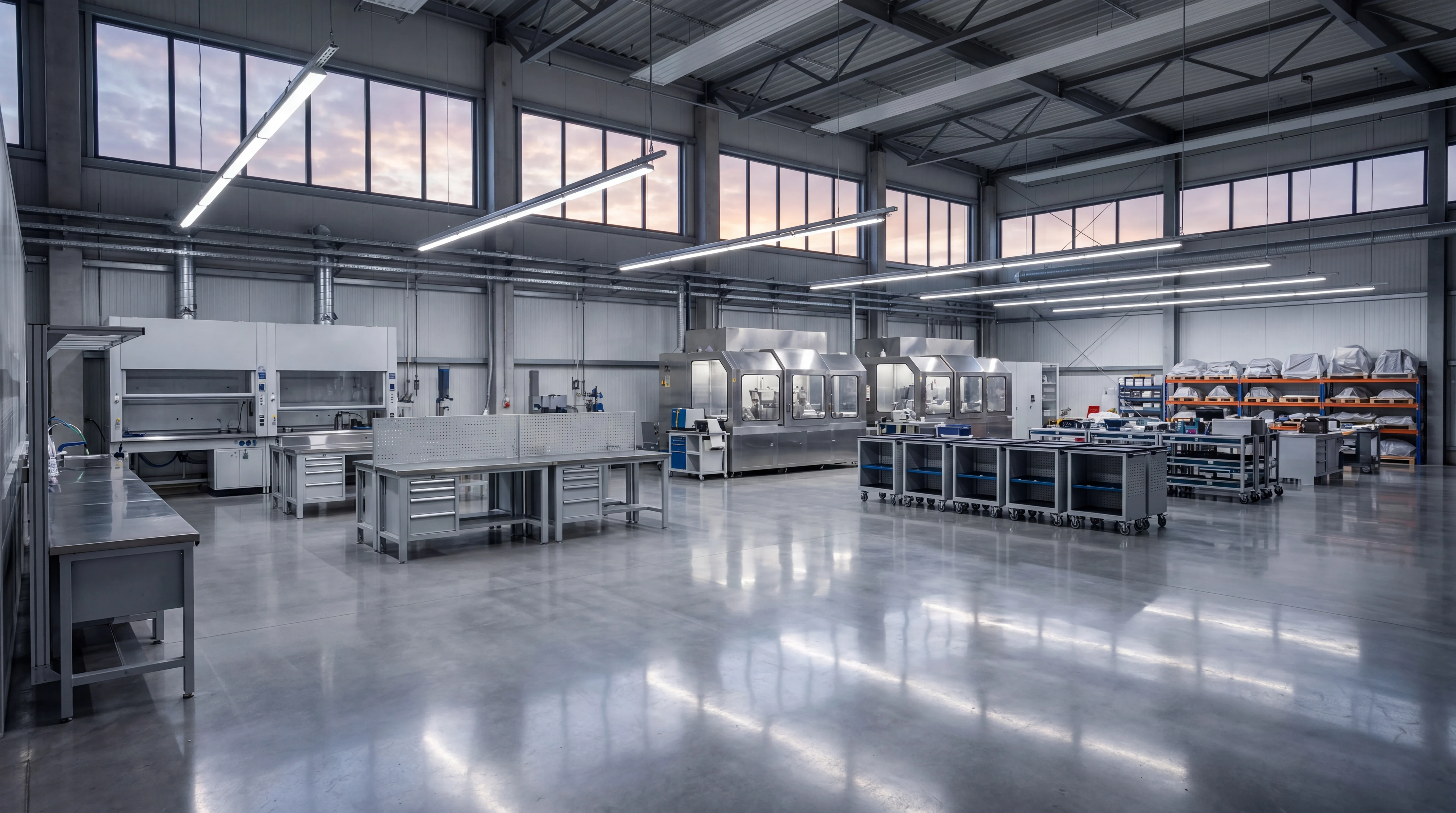
Thread, Weld, and Assembly Polishing: Methods Covered
Each method below has its own acceptance criteria and finishing equipment. The intake directs the part to the finishing facility with the appropriate method and accreditation.
Thread Lapping (Micro-Abrasive Precision Screw Lapping)
Thread lapping is utilized to achieve exceptional surface finishes and precise dimensional control on external and internal threaded components, particularly when correcting minor distortions induced during heat treatment or machining. By employing custom-machined laps - typically cast iron or brass - charged with fine diamond or aluminum oxide abrasive compounds, the thread flanks, root, and crest are systematically refined. This micro-abrasive process improves the surface roughness average (Ra) along the thread flanks, reducing friction, mitigating galling risks, and ensuring uniform load distribution across mated assemblies. Procedures are executed to support alignment with stringent thread form specifications, including ASME B1.1 for Unified Inch Screw Threads and aerospace-specific AS8879 requirements, where pitch diameter and flank angle accuracy are strictly monitored.
Precision thread lapping operations focus on key technical parameters to ensure structural integrity and functional reliability in high-cycle or high-stress environments. Critical control points during the abrasive lapping process include:
- Correction of pitch diameter variations to sub-micron diametral tolerances.
- Refinement of thread flank surface finishes to specific Ra or Rz targets.
- Elimination of localized high spots and microscopic burrs left by hard turning or thread grinding.
- Restoration of thread form parallelism and concentricity relative to the primary component axis.
Mirror Finish Weld Polishing
Mirror finish weld polishing is executed to eliminate surface discontinuities, porosity, and weld discoloration, transforming joined sections into a singular, uninterrupted surface. This process is critical for sanitary, pharmaceutical, and high-vacuum applications governed by standards such as ASME BPE and AWS D18.1. Achieving a true mirror finish (typically defined as a surface roughness Ra of less than 4 micro-inches or 0.1 micrometers) requires a systematic progression of abrasive media. Initial weld reinforcement removal is conducted using rigid grinding wheels, followed by sequential stages of coated abrasive belts or discs, transitioning from coarse grits to ultra-fine silicon carbide or aluminum oxide compounds. The final reflective luster is produced utilizing cotton or felt buffing wheels loaded with high-purity polishing compounds.
Precision execution of this service relies on strict adherence to technical parameters to maintain structural integrity and surface uniformity:
- Surface Roughness Limits: Target finishes are verified using contact or non-contact profilometry to ensure compliance with ASME B46.1 guidelines, consistently achieving Ra values below 0.1 microns.
- Thermal Control: Rotational speeds and contact pressure are regulated to prevent localized overheating, which can cause heat tint, grain growth, or sensitization in austenitic stainless steels.
- Geometric Blending: Parent metal and weld bead transitions are blended seamlessly, maintaining the required wall thickness tolerances specified under ASME Section VIII.
- Contamination Control: Dedicated iron-free abrasives and compounds are utilized exclusively on stainless steel and non-ferrous alloys to prevent cross-contamination and subsequent pitting corrosion.
Electrochemical Weld Cleaning / Polishing (TIG / MIG Seams)
Electrochemical weld cleaning and polishing are utilized to address heat tint and cross-contamination generated during Gas Tungsten Arc Welding (GTAW) and Gas Metal Arc Welding (GMAW) processes. By applying a controlled electrical current in conjunction with specific electrolytic fluids, the chromium-depleted oxide layer is preferentially dissolved from the weld seam and Heat-Affected Zone (HAZ). This localized anodic dissolution not only removes severe discoloration but simultaneously accelerates passivation, restoring the natural corrosion-resistant properties of stainless steel and high-nickel alloys in accordance with ASTM A380 and ASTM A967 guidelines.
Depending on the surface finish requirements, process variables are strictly controlled to manipulate the final weld profile without inducing thermal distortion:
- Direct Current (DC) Polishing: Utilized to aggressively level micro-peaks on the weld bead, yielding a reflective, high-purity finish required for sanitary, fluid handling, or high-vacuum applications.
- Alternating Current (AC) Cleaning: Deployed to strip heavy oxidation and weld scale without substantially altering the existing surface topography or base metal finish.
- Electrolyte Calibration: Solutions are selected based on base alloy composition to prevent micro-pitting and ensure uniform passivation across the entire HAZ.
- Post-Process Neutralization: Alkaline agents are applied immediately to halt electrolytic action and prevent residual acid etching, followed by a meticulous deionized water rinse.
Precision parameters are maintained throughout the electrochemical process to ensure the dimensional stability of adjacent threaded components, sealing surfaces, or complex assemblies, entirely bypassing the surface degradation risks associated with mechanical grinding or wire brushing.
Additional Techniques and Variants
Specialized variants and adjacent techniques available on engineering review. Click an entry for a short description.
Flap Disc Weld Blending
Flap Disc Weld Blending is supported as a variant of thread, weld, and assembly polishing work for Indiana-area parts. Acceptance criteria, abrasive grade, and process control points are confirmed against the customer specification at intake.
Non-Woven Abrasive (Scotch-Brite-Type) Weld Finishing
Non-Woven Abrasive (Scotch-Brite-Type) Weld Finishing is supported as a variant of thread, weld, and assembly polishing work for Indiana-area parts. Acceptance criteria, abrasive grade, and process control points are confirmed against the customer specification at intake.
Corner / Fillet Weld Polishing (Cross / Square / Five-Point Access)
Corner / Fillet Weld Polishing (Cross / Square / Five-Point Access) is supported as a variant of thread, weld, and assembly polishing work for Indiana-area parts. Acceptance criteria, abrasive grade, and process control points are confirmed against the customer specification at intake.
How an Indiana Thread, Weld, and Assembly Polishing Job Runs
Intake
Material, geometry, target Ra or finish standard, quantity, and ship-back address captured in the form above.
Engineering Review
Method, abrasive grade, and acceptance criteria are confirmed against the spec by the finishing facility before parts ship.
Controlled Processing
Thread, Weld, and Assembly Polishing is performed at an accredited shop with in-process profilometer checks to prevent over-polishing.
QA and Return
Final Ra, flatness, and (where specified) passivation are logged. Parts are cleaned and returned to Indiana on a logged carrier.
In-Depth Reference for Indiana
Industrial Drivers for Thread, Weld, and Assembly Polishing in Indiana
The concentration of advanced manufacturing and medical technology within the Indiana I-65 and I-70 corridors creates a sustained requirement for specialized thread, weld, and assembly polishing. In the northern region, specifically within the Kosciusko County orthopedic cluster encompassing Warsaw, the integration of complex multi-component medical assemblies necessitates precise surface finishing to ensure biocompatibility and mechanical longevity. Facilities such as those operated by Zimmer Biomet and DePuy Synthes utilize intricate threaded interfaces in surgical instrumentation and implantable hardware where minor surface irregularities or burrs can lead to catastrophic galling or particulate shedding. Furthermore, the concentration of heavy engine manufacturing in Columbus and the aerospace presence in Indianapolis, notably centered around the manufacturing hubs near the Indianapolis International Airport, drives the need for weld polishing on turbine components and high-pressure fuel delivery systems. These assemblies often feature complex geometries where mechanical finishing of internal diameters and fillet welds is mandatory to eliminate stress risers and ensure structural integrity under extreme thermal cycling.
In the northern reaches of the state, particularly within the Elkhart and Goshen regions, the specialty vehicle and recreational vehicle (RV) industry generates a high volume of demand for assembly polishing. The integration of stainless steel kitchen components, custom chassis welds, and decorative trim in high-end specialty coaches requires a consistent finish that can withstand the vibrations and environmental exposure typical of long-term transit. Additionally, the industrial landscape of the Calumet region in Northwest Indiana, including the BP Whiting Refinery and various steel processing centers, imposes heavy-duty requirements for thread polishing on large-scale piping and pressure vessel assemblies. In these petrochemical environments, the integrity of threaded connections is paramount for containing hazardous materials at high pressures, requiring a surface finish that allows for accurate torque application and hermetic sealing. The presence of the Mid-America Science Park in Scottsburg also points toward a growing demand for assembly polishing in defense-related research and development, where prototype hardware must meet stringent military specifications for finish and fitment prior to field testing.
Technical and Compliance Context for Polishing Operations
Technical compliance for thread, weld, and assembly polishing within Indiana is dictated by a multi-tiered regulatory and standards-based framework. For the pharmaceutical and life sciences sector centered in Indianapolis, adherence to FDA 21 CFR Part 211 is fundamental. This regulation specifies that all equipment surfaces must be finished to a degree that prevents product contamination. In practice, this requires weld polishing to be performed according to ASME BPE (Bioprocessing Equipment) standards, which define specific acceptance criteria for weld penetration, convexity, and surface roughness. Typically, a surface finish of 20 micro-inches Ra or better is mandated, often followed by passivation processes to restore the chromium-oxide layer on stainless steel assemblies. These finishes must be verified using profilometry equipment that is calibrated with NIST-traceable standards, ensuring that the measurement data is legally and technically defensible. Furthermore, the ISO 13485 standard for medical device quality management systems governs the Warsaw orthopedic cluster, necessitating detailed documentation of every polishing step to ensure full traceability from raw material to finished assembly.
In the broader industrial and heavy manufacturing sectors of Indiana, ASTM standards provide the baseline for technical acceptance. ASTM A380 and ASTM B912 are frequently cited as the governing documents for the cleaning, descaling, and polishing of stainless steel assemblies. These standards outline the chemical and mechanical methods required to remove heat tint from weld zones and to ensure that threaded components are free from embedded iron particles that could lead to localized pitting corrosion. For structural welds, particularly in the infrastructure and transportation sectors, compliance with AWS D1.1 or D1.6 is common, where the polishing process is used to prepare the surface for non-destructive testing (NDT) such as liquid penetrant or magnetic particle inspection. The acceptance criteria in these instances focus on the removal of undercut, overlap, and surface porosity to meet specific stress-load requirements. Traceability is maintained through comprehensive material test reports and surface finish certifications, ensuring that every assembly meets the dictated acceptance criteria before deployment. Adherence to ISO/IEC 17025 for the calibration of measurement tools further supports the reliability of these finishing processes in highly regulated Indiana industrial sectors.