Precision Electropolishing Services Kenosha
Electrochemical surface refinement for stainless and exotic alloys, conformant to ASTM B912-02, ASME BPE, SEMI F19, and ISO 15730.
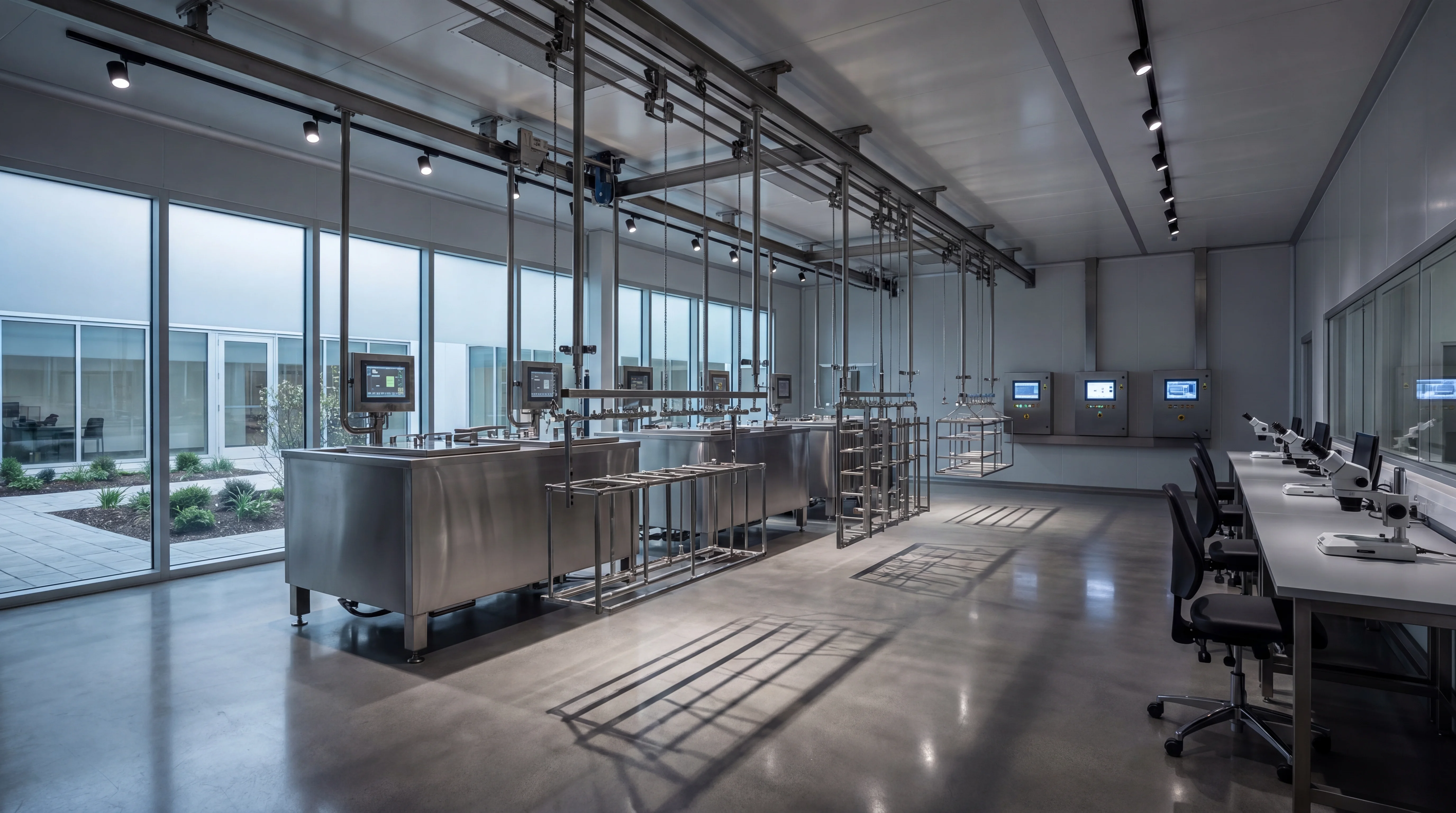
Electropolishing: Methods Covered
Each method below has its own acceptance criteria and finishing equipment. The intake directs the part to the finishing facility with the appropriate method and accreditation.
ASTM B912-02 Stainless Steel Electropolishing/Passivation
Electrochemical polishing of stainless steel alloys is executed in strict accordance with the ASTM B912-02 standard specification, establishing a highly corrosion-resistant, passive surface layer. Through this controlled anodic dissolution process, surface contaminants and free iron are systematically removed, selectively depleting iron from the outer alloy matrix while enriching the chromium-to-iron ratio. This precision process yields a microscopically smooth, featureless finish, reducing average surface roughness (Ra) by up to 50 percent depending on the initial material state. Surface optimization achieved under ASTM B912-02 is critical for components utilized in ultra-pure and sanitary environments, preventing particulate entrapment and biological adhesion.
- Chromium-to-Iron Ratio: Minimizing surface iron to optimize the passive chromium oxide layer.
- Roughness Reduction: Significantly decreasing Ra values to satisfy ASME B46.1 surface texture requirements.
- Micro-Deformation Removal: Eliminating micro-burrs, sharp edges, and localized stresses induced by machining.
- Passivation Validation: Verifying surface passivity through testing methods such as water immersion, high humidity, or copper sulfate testing per ASTM A967.
- Alloy Compatibility: Successfully processing austenitic, martensitic, and duplex stainless steel grades, including 304, 316L, and 17-4 PH.
ASME BPE Electropolishing (Bioprocessing Equipment)
ASME BPE (Bioprocessing Equipment) standard dictates strict requirements for electropolishing of stainless steel surfaces to ensure cleanability and corrosion resistance in hygienic systems. Electropolishing is performed to meet precise surface finish criteria, typically targeting a maximum surface roughness (Ra) of 15 microinches (0.38 micrometers) or 20 microinches (0.51 micrometers) depending on the surface designation class. The electrochemical process selectively removes iron from the outer alloy matrix, enriching the passive layer with chromium to achieve an optimal chromium-to-iron ratio. This reduction in surface area eliminates microscopic crevice sites where contaminants or bacteria can colonize, satisfying stringent biopharmaceutical hygiene requirements.
- Surface Roughness (Ra): Acceptance criteria range from SF1 (20 microinches Ra max) to SF4 (15 microinches Ra max with electropolishing).
- Chromium Enrichment: Surface chemistry is optimized to achieve a minimum Cr/Fe ratio of 1.5 to 1.8 to prevent microbial adhesion.
- Material Integrity: Process parameters prevent defects such as pitting, frosting, or end-grain attack on 316L stainless steel alloys.
- Weld Conditioning: Weldments are fully conditioned and passivated to ensure uniform surface energy across the heat-affected zone.
SEMI F19 Semiconductor Electropolishing
Electropolishing for semiconductor applications is executed in strict adherence to the SEMI F19 specification, ensuring the wetted surfaces of 316L stainless steel components meet stringent ultra-high-purity (UHP) requirements. This electrochemical process selectively dissolves surface asperities, removing the amorphous Beilby layer left by mechanical machining. The controlled anodic dissolution results in a micro-smoothed surface with significantly reduced total surface area, minimizing potential sites for particulate entrapment and molecular outgassing in ultra-high-vacuum (UHV) fluid delivery systems.
Compliance with SEMI F19 dictates rigorous control over both surface topography and surface chemistry. Essential parameters targeted during the electropolishing sequence include:
- Chromium-to-Iron (Cr:Fe) Ratio: Surface chemistry is optimized to produce a highly passive oxide layer, typically requiring a Cr:Fe ratio exceeding 1.5:1 as measured by Auger Electron Spectroscopy (AES).
- Oxide Layer Depth: The electrochemical treatment thickens the protective chromium-rich oxide film, commonly targeting a depth of 15 to 20 angstroms to maximize corrosion resistance against aggressive precursor gases.
- Surface Roughness (Ra): Micro-roughness is systematically reduced to meet precise threshold values, often achieving Ra finishes of 5 microinches (0.13 micrometers) or better.
- Contaminant Eradication: The process effectively eliminates free iron, embedded abrasives, and silica inclusions, yielding a metallurgically clean surface free of intergranular attack or pitting.
ASTM E1558 Metallographic Electropolishing
Metallographic electropolishing is executed in strict accordance with ASTM E1558 guidelines to prepare metallic specimens for advanced microstructural analysis. By utilizing controlled anodic dissolution, the process selectively removes the outer layers of the substrate without introducing mechanical strain, residual stress, or deformation typical of traditional abrasive grinding. This methodology is essential for yielding a pristine, artifact-free surface required for high-resolution diagnostic techniques, including electron backscatter diffraction (EBSD), scanning electron microscopy (SEM), and precise microindentation hardness testing.
To maintain absolute precision and traceability across varying material grades, critical operational parameters are continuously monitored and adjusted during the electrolytic polishing cycle:
- Electrolyte composition and concentration, specifically formulated for target alloy families such as austenitic stainless steels, titanium, or nickel-based superalloys.
- Current density and voltage regulation to ensure operation within the optimal polishing plateau, strictly preventing localized pitting or preferential anodic etching.
- Bath temperature control and continuous fluid agitation to facilitate uniform ion transfer and mitigate thermal degradation of the specimen surface.
- Calculated immersion timing protocols to achieve exact material removal rates while preserving critical edge retention and microscopic phase integrity.
ISO 15730 Stainless Steel Smoothing And Passivation
Electropolishing of stainless steel alloys is performed in strict accordance with ISO 15730 to achieve both micro-smoothing and effective passivation. This electrochemical process selectively removes high points from the metal surface, resulting in a significant reduction in surface roughness (Ra) and the elimination of micro-burrs, scaling, and embedded iron impurities. By establishing anodic polarization within an acid electrolyte bath under controlled temperature and current density, the surface chemistry is optimized to maximize the chromium-to-iron ratio, forming a highly corrosion-resistant chromium oxide passive layer.
The execution of ISO 15730 electropolishing yields critical technical benefits for demanding industrial applications:
- Surface Roughness Reduction: Achieves up to a 50 percent reduction in Ra values, smoothing microscopic peaks to limit bacterial adhesion and friction.
- Enhanced Corrosion Resistance: Optimizes passivation by selectively dissolving iron, leaving a chromium-rich surface layer that resists oxidation.
- Deburring and Decontamination: Removes microscopic burrs and free iron particles introduced during machining, stamping, or welding operations.
- Hydrogen Embrittlement Relief: Minimizes the risk of hydrogen absorption compared to traditional chemical pickling methods, preserving metallurgical integrity.
Additional Techniques and Variants
Specialized variants and adjacent techniques available on engineering review. Click an entry for a short description.
Anodic Polishing (Electrochemical Polishing)
Anodic Polishing (Electrochemical Polishing) is supported as a variant of electropolishing work for Kenosha-area parts. Acceptance criteria, abrasive grade, and process control points are confirmed against the customer specification at intake.
Electrolytic Polishing (Metallographic Specimen Prep)
Electrolytic Polishing (Metallographic Specimen Prep) is supported as a variant of electropolishing work for Kenosha-area parts. Acceptance criteria, abrasive grade, and process control points are confirmed against the customer specification at intake.
Citric Acid Post-Dip Passivation
Citric Acid Post-Dip Passivation is supported as a variant of electropolishing work for Kenosha-area parts. Acceptance criteria, abrasive grade, and process control points are confirmed against the customer specification at intake.
Nitric Acid Post-Dip Passivation
Nitric Acid Post-Dip Passivation is supported as a variant of electropolishing work for Kenosha-area parts. Acceptance criteria, abrasive grade, and process control points are confirmed against the customer specification at intake.
How a Kenosha Electropolishing Job Runs
Intake
Material, geometry, target Ra or finish standard, quantity, and ship-back address captured in the form above.
Engineering Review
Method, abrasive grade, and acceptance criteria are confirmed against the spec by the finishing facility before parts ship.
Controlled Processing
Electropolishing is performed at an accredited shop with in-process profilometer checks to prevent over-polishing.
QA and Return
Final Ra, flatness, and (where specified) passivation are logged. Parts are cleaned and returned to Kenosha on a logged carrier.
In-Depth Reference for Kenosha
Local Industrial Demand for Electropolishing Services in Kenosha, Wisconsin
The manufacturing and industrial landscape of Kenosha, Wisconsin, situated strategically along the I-94 corridor between the heavy manufacturing hubs of Chicago and Milwaukee, generates a sustained requirement for advanced surface finishing processes. Within expansive commercial developments like the LakeView Corporate Park and the Business Park of Kenosha, facilities frequently process high-purity stainless steel components destined for the regional food processing, pharmaceutical, and precision engineering supply chains. Electropolishing is utilized heavily by these local manufacturing sectors to fundamentally modify the surface topography of complex machined parts, castings, and welded assemblies. By subjecting stainless steel alloys, particularly 304, 316L, and 17-4 PH, to controlled electrochemical dissolution, microscopic surface asperities are leveled. This process results in a microscopic surface profile that is highly resistant to both particulate adhesion and bacterial colonization. The demand within Kenosha County is directly tied to the fabrication of sanitary fluid handling systems, heat exchangers, and mixing vessels utilized by the robust dairy processing and brewing sectors present throughout Wisconsin. Furthermore, as Kenosha continues to attract light manufacturing and biomedical device component producers, the requirement for ultra-clean, passive surfaces on specialized metal components has intensified.
These regional facilities operate under stringent operational pressures to eliminate the risk of cross-contamination and to extend the fatigue life of critical components operating in highly corrosive environments. The ambient atmospheric conditions of Southeastern Wisconsin, combined with the rigorous chemical washdown procedures routinely employed in local food-grade plants, mandate a surface treatment that effectively removes free iron while enriching the chromium oxide layer to prevent rogue corrosion. During the fabrication of large-scale processing skids in Kenosha-based metalworking shops, welding and machining operations inevitably leave behind heat tint, scale, and embedded tooling materials. The anodic dissolution achieved through electropolishing targets these high-energy microscopic peaks selectively, stripping away compromised material and leaving a monolithic, passive surface. This not only restores the elemental integrity of the stainless steel but also drastically reduces the coefficient of friction, mitigating galling and fretting in threaded assemblies and moving parts critical to industrial machinery distributed from the Kenosha logistics hub.
Technical Standards and Compliance Context for Electrochemical Polishing
The execution of electropolishing for components manufactured in the Kenosha area is governed by a strict matrix of technical standards and regulatory compliance frameworks. Primary among these is ASTM B912, the standard specification for passivation of stainless steels using electropolishing. This standard dictates the fundamental parameters for electrolytic baths, including the precise ratios of sulfuric and phosphoric acids, strict thermal controls, and precise current density calculations based on the surface area of the workpiece. Facilities producing fluid routing equipment for the pharmaceutical and biotechnology sectors must ensure that surface finishes comply directly with the requirements outlined in the ASME Bioprocessing Equipment (BPE) standard. The ASME BPE defines strict acceptance criteria for surface roughness, often requiring a maximum Ra (average roughness) of 15 microinches or lower, depending on the specific fluid contact surface classification. Additionally, for components entering the medical device or pharmaceutical supply chains, finishing processes must align with the current Good Manufacturing Practice (cGMP) regulations enforced under FDA 21 CFR Part 211, which mandates exhaustive documentation, procedural validation, and batch traceability of all surface finishing procedures.
To verify compliance with these rigorous specifications, finished components undergo comprehensive testing and validation protocols post-process. Acceptance criteria extend far beyond mere visual inspection for uniform luster or the absence of pitting, frosting, and localized etching. Quantitative surface analysis utilizes calibrated profilometers to verify the required reduction in Ra values across complex geometries. Furthermore, to confirm the efficacy of the passivation layer achieved during the electropolishing sequence, parts are frequently subjected to chemical verification methods such as the copper sulfate test or the highly sensitive ferroxyl test, as detailed in ASTM A380 and ASTM A967. These tests ensure the complete eradication of exogenous iron. Strict dimensional tolerances must also be maintained and verified, as the electropolishing process inherently removes material - typically ranging from 0.0002 to 0.001 inches per surface. Traceability requirements necessitate that all process variables, including bath specific gravity, applied voltage, immersion duration, and subsequent neutralizing and deionized (DI) water rinsing cycles per ASTM D1193, are meticulously recorded. This gathered data forms a permanent quality assurance record, enabling Kenosha-based original equipment manufacturers to maintain verifiable NIST traceability and provide compliance documentation to stringent regulatory bodies.