Precision Mechanical Polishing Services Waterloo
Rotary wheel, belt, buffing, lapping, and CMP operations for general surface refinement and semiconductor / optical substrates.
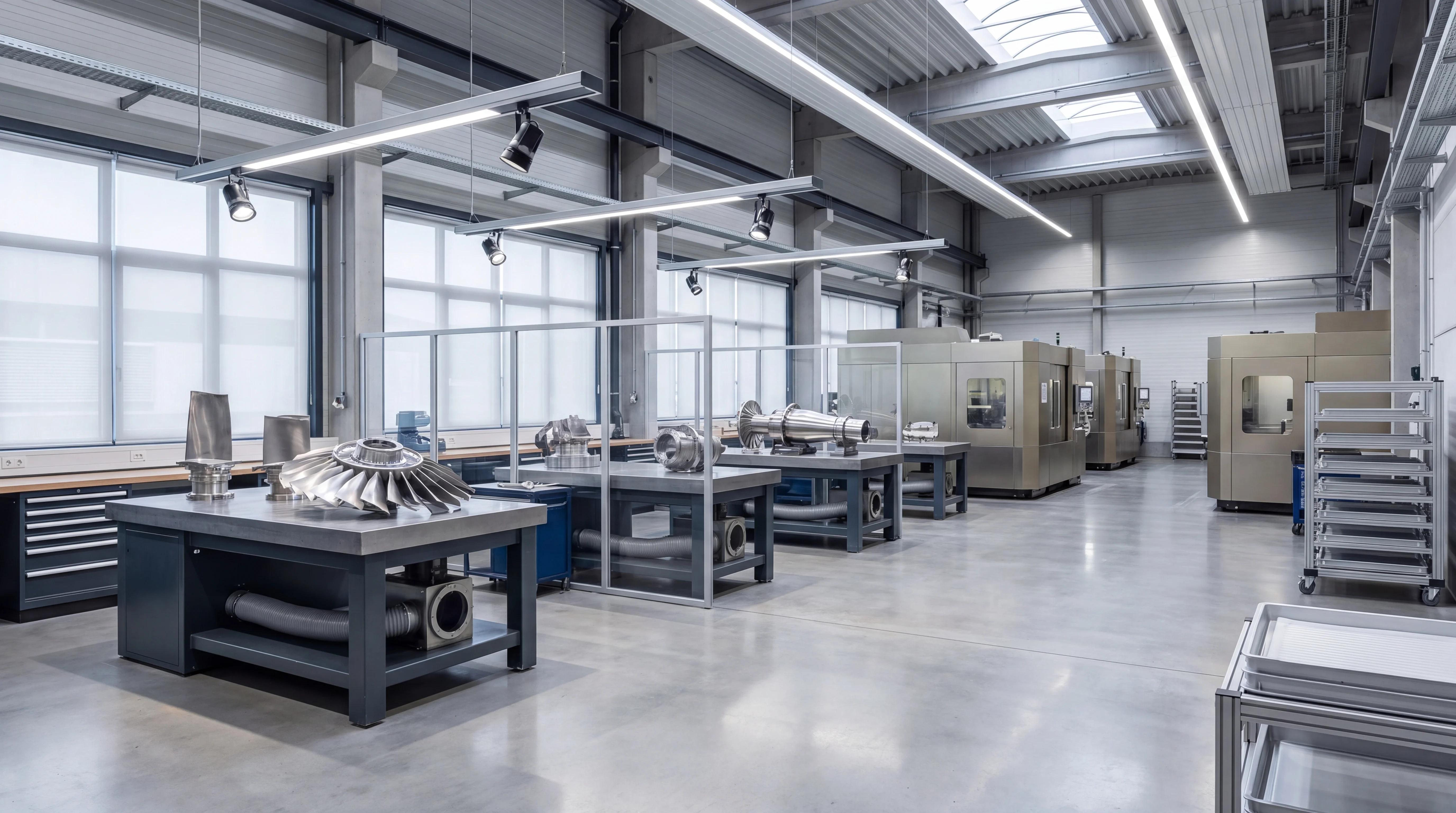
Mechanical Polishing: Methods Covered
Each method below has its own acceptance criteria and finishing equipment. The intake directs the part to the finishing facility with the appropriate method and accreditation.
Chemical-Mechanical Polishing (CMP)
Chemical-mechanical polishing (CMP) is executed by introducing a precisely formulated, abrasive-laden chemical slurry between a compliant polishing pad and the targeted workpiece. This advanced hybrid methodology simultaneously leverages chemical surface oxidation to soften the substrate material and mechanical abrasion to remove it. Such synergistic action enables extreme planarization and sub-nanometer surface finishes that cannot be achieved through conventional mechanical polishing alone. The process parameters - including downforce, platen speed, and slurry chemistry - are rigorously controlled to mitigate subsurface damage, a critical requirement for silicon wafers, precision optics, and extreme sealing surfaces. By systematically balancing chemical reactivity with mechanical friction, surface finishes are routinely driven into the single-digit angstrom range.
When absolute precision and defect-free mirror finishes are mandated by engineering specifications, CMP is deployed to meet stringent tolerances. Typical process outcomes and control metrics include:
- Reduction of surface roughness (Ra) and root-mean-square (RMS) variations to sub-nanometer thresholds, verified by high-resolution interferometry.
- Correction of localized topographical irregularities to achieve global planarization and strict optical flatness.
- Elimination of scratch-dig defects in strict alignment with ISO 10110 surface imperfection standards.
- Preservation of tight parallelism and thickness uniformity across large-diameter technical substrates.
- Complete removal of residual mechanical stress layers induced by preceding lapping or grinding operations.
Additional Techniques and Variants
Specialized variants and adjacent techniques available on engineering review. Click an entry for a short description.
Rotary Polishing (Wheel/Belt Machines)
Rotary Polishing (Wheel/Belt Machines) is supported as a variant of mechanical polishing work for Waterloo-area parts. Acceptance criteria, abrasive grade, and process control points are confirmed against the customer specification at intake.
Belt Polishing / Abrasive Belt Grinding
Belt Polishing / Abrasive Belt Grinding is supported as a variant of mechanical polishing work for Waterloo-area parts. Acceptance criteria, abrasive grade, and process control points are confirmed against the customer specification at intake.
Buffing (Cloth/Soft Wheel With Polishing Compound)
Buffing (Cloth/Soft Wheel With Polishing Compound) is supported as a variant of mechanical polishing work for Waterloo-area parts. Acceptance criteria, abrasive grade, and process control points are confirmed against the customer specification at intake.
Mechanical Lapping
Mechanical Lapping is supported as a variant of mechanical polishing work for Waterloo-area parts. Acceptance criteria, abrasive grade, and process control points are confirmed against the customer specification at intake.
Sandpaper / Abrasive Disc Polishing
Sandpaper / Abrasive Disc Polishing is supported as a variant of mechanical polishing work for Waterloo-area parts. Acceptance criteria, abrasive grade, and process control points are confirmed against the customer specification at intake.
How a Waterloo Mechanical Polishing Job Runs
Intake
Material, geometry, target Ra or finish standard, quantity, and ship-back address captured in the form above.
Engineering Review
Method, abrasive grade, and acceptance criteria are confirmed against the spec by the finishing facility before parts ship.
Controlled Processing
Mechanical Polishing is performed at an accredited shop with in-process profilometer checks to prevent over-polishing.
QA and Return
Final Ra, flatness, and (where specified) passivation are logged. Parts are cleaned and returned to Waterloo on a logged carrier.
In-Depth Reference for Waterloo
Industrial Demand for Surface Finishing in the Cedar Valley
Waterloo, Iowa, serves as a central manufacturing hub within the Cedar Valley, heavily anchored by agricultural machinery production, heavy drivetrain manufacturing, and industrial-scale food processing. Facilities operating along the US Highway 20 corridor and the Avenue of the Saints require stringent mechanical polishing for both functional tribological applications and sanitary system integrations. The massive footprint of heavy equipment manufacturing in Black Hawk County, most notably driven by operations such as the John Deere Tractor and Cab Assembly and the John Deere Engine Works, creates a localized supply chain highly dependent on precise surface modification. Within this heavy manufacturing ecosystem, mechanical polishing is not merely cosmetic; it is a critical engineering requirement for structural integrity and operational efficiency. Hydraulic cylinder rods, engine crankshafts, transmission gears, and fuel injection components manufactured throughout the Waterloo metropolitan area require highly specific surface roughness profiles. These engineered finishes are necessary to ensure proper hydraulic seal retention, optimize fluid film lubrication, reduce frictional losses, and prevent premature wear under heavy cyclical loading. Local fabrication and machining contractors supporting these anchor OEMs are continuously tasked with meeting exact micro-finish specifications on hardened carbon steels, cast irons, and advanced alloy forgings.
Beyond heavy machinery and agricultural equipment, the Waterloo industrial landscape includes significant food processing and handling operations, including large-scale protein processing facilities like Tyson Foods and various regional dairy and grain milling operations. In these environments, mechanical polishing is extensively utilized to bring 300-series stainless steel equipment into compliance with strict hygienic standards. The localized concentration of both high-wear mechanical manufacturing and sanitary food processing dictates a continuous requirement for abrasive finishing, grinding, lapping, and buffing operations. Material handling conveyors, mixing vats, sanitary piping spools, and extrusion dies must be systematically polished to eliminate micro-crevices where biological contaminants could accumulate. Regional fabrication shops supporting these sectors rely on documented surface preparation to meet the rigorous original equipment manufacturer specifications and stringent food safety mandates that govern the area's primary economic outputs, necessitating a robust local infrastructure for advanced mechanical surface finishing.
Technical Specifications and Regulatory Standards for Abrasive Polishing
The execution of mechanical polishing within Waterloo's diverse industrial sectors is governed by strict quantitative surface texture parameters, primarily defined by ASME B46.1 (Surface Texture: Surface Roughness, Waviness, and Lay). For the agricultural and heavy engine manufacturing sectors, engineering drawings mandate precise Roughness Average (Ra), Maximum Profile Height (Rz), and Root Mean Square (RMS) values. Attaining these demanding tolerances requires a highly controlled progression of abrasive media, moving systematically from coarse grinding with aluminum oxide or silicon carbide belts down to fine honing or diamond paste buffing, frequently achieving finishes measuring below 16 micro-inches (0.4 micrometers) Ra. Verification of these specialized finishes is conducted using calibrated contact profilometers equipped with diamond styli, or through non-contact optical profilometry, ensuring all measurement data maintains strict traceability back to NIST reference standards. In mechanical power transmission applications, such as those produced for Waterloo's tractor assembly lines, maintaining exact dimensional tolerances while altering the surface topography is absolutely critical; therefore, abrasive stock removal rates must be mathematically calculated and monitored to prevent out-of-tolerance nonconformances on critical bearing journals and seal interfaces.
For the food processing and hygienic equipment prevalent across Black Hawk County, mechanical polishing operations must satisfy complex sanitary design requirements, notably complying with 3-A Sanitary Standards and FDA 21 CFR regulations for food contact surfaces. Equipment intended for these high-purity environments typically requires a minimum of a No. 4 sanitary finish, characterized by a uniform Ra of 32 micro-inches or smoother. Polishing procedures must mechanically eradicate all pits, folds, weld undercut, and surface porosity to prevent bacterial harborage and biofilm formation. Compliance in this specific sector often requires multi-directional polishing techniques to eliminate deep directional striations where pathogens could otherwise accumulate and resist clean-in-place sanitation protocols. Furthermore, heavy manufacturing and fabrication facilities operating under ISO 9001:2015 quality management systems mandate comprehensive material test reports and verifiable surface finish certification for all polished components. Acceptance criteria are rigidly enforced through tactile inspection, visual validation under magnification, and instrumental validation, ensuring that every mechanically polished surface meets both the metallurgical constraints of the base alloy and the rigid regulatory compliance frameworks dictated by the final operational environment.