Precision Thread, Weld, and Assembly Polishing Services Waukesha
Precision thread, weld, and assembly polishing performed by an accredited finishing facility for Waukesha-area parts.
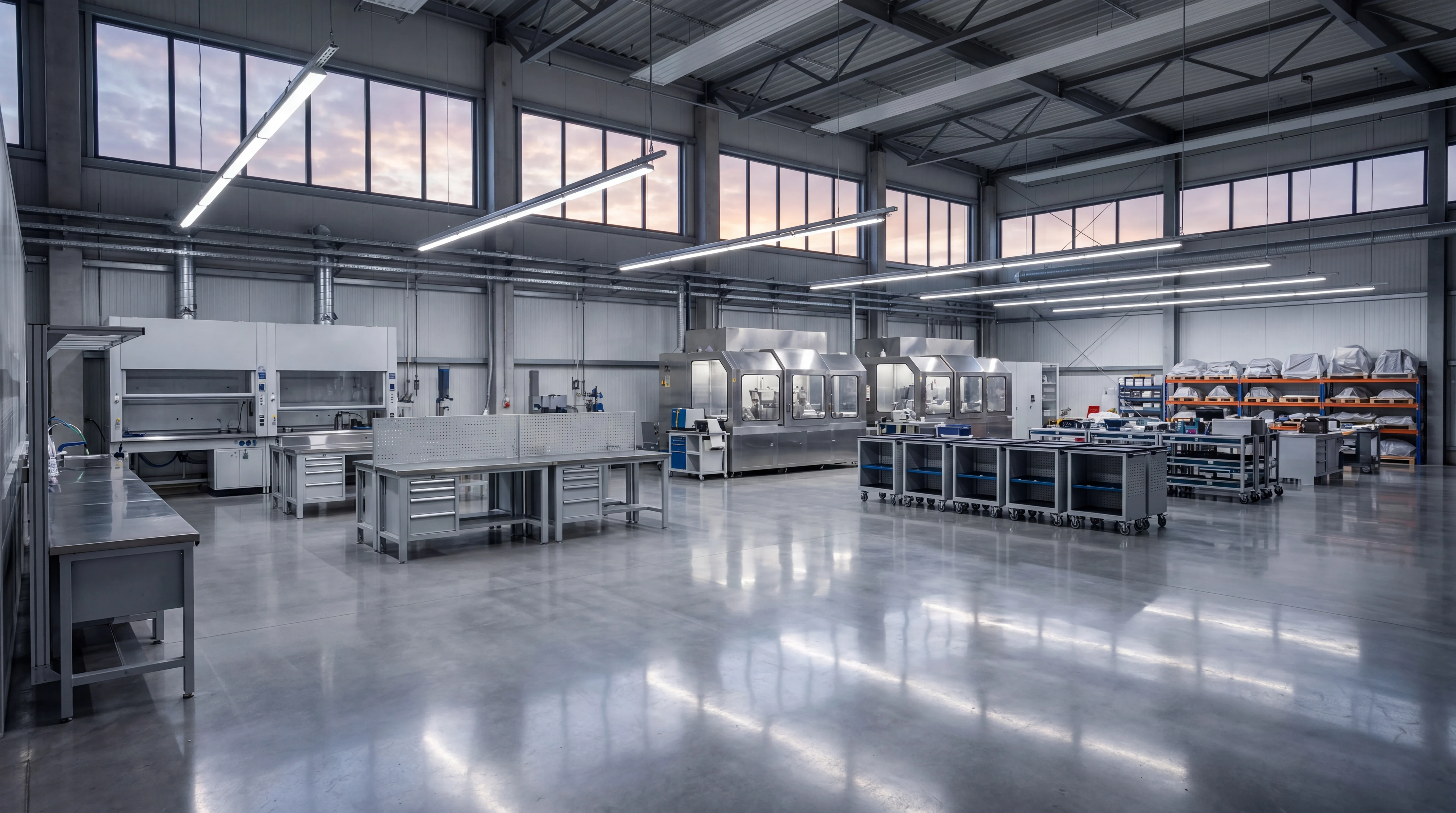
Thread, Weld, and Assembly Polishing: Methods Covered
Each method below has its own acceptance criteria and finishing equipment. The intake directs the part to the finishing facility with the appropriate method and accreditation.
Thread Lapping (Micro-Abrasive Precision Screw Lapping)
Thread lapping is utilized to achieve exceptional surface finishes and precise dimensional control on external and internal threaded components, particularly when correcting minor distortions induced during heat treatment or machining. By employing custom-machined laps - typically cast iron or brass - charged with fine diamond or aluminum oxide abrasive compounds, the thread flanks, root, and crest are systematically refined. This micro-abrasive process improves the surface roughness average (Ra) along the thread flanks, reducing friction, mitigating galling risks, and ensuring uniform load distribution across mated assemblies. Procedures are executed to support alignment with stringent thread form specifications, including ASME B1.1 for Unified Inch Screw Threads and aerospace-specific AS8879 requirements, where pitch diameter and flank angle accuracy are strictly monitored.
Precision thread lapping operations focus on key technical parameters to ensure structural integrity and functional reliability in high-cycle or high-stress environments. Critical control points during the abrasive lapping process include:
- Correction of pitch diameter variations to sub-micron diametral tolerances.
- Refinement of thread flank surface finishes to specific Ra or Rz targets.
- Elimination of localized high spots and microscopic burrs left by hard turning or thread grinding.
- Restoration of thread form parallelism and concentricity relative to the primary component axis.
Mirror Finish Weld Polishing
Mirror finish weld polishing is executed to eliminate surface discontinuities, porosity, and weld discoloration, transforming joined sections into a singular, uninterrupted surface. This process is critical for sanitary, pharmaceutical, and high-vacuum applications governed by standards such as ASME BPE and AWS D18.1. Achieving a true mirror finish (typically defined as a surface roughness Ra of less than 4 micro-inches or 0.1 micrometers) requires a systematic progression of abrasive media. Initial weld reinforcement removal is conducted using rigid grinding wheels, followed by sequential stages of coated abrasive belts or discs, transitioning from coarse grits to ultra-fine silicon carbide or aluminum oxide compounds. The final reflective luster is produced utilizing cotton or felt buffing wheels loaded with high-purity polishing compounds.
Precision execution of this service relies on strict adherence to technical parameters to maintain structural integrity and surface uniformity:
- Surface Roughness Limits: Target finishes are verified using contact or non-contact profilometry to ensure compliance with ASME B46.1 guidelines, consistently achieving Ra values below 0.1 microns.
- Thermal Control: Rotational speeds and contact pressure are regulated to prevent localized overheating, which can cause heat tint, grain growth, or sensitization in austenitic stainless steels.
- Geometric Blending: Parent metal and weld bead transitions are blended seamlessly, maintaining the required wall thickness tolerances specified under ASME Section VIII.
- Contamination Control: Dedicated iron-free abrasives and compounds are utilized exclusively on stainless steel and non-ferrous alloys to prevent cross-contamination and subsequent pitting corrosion.
Electrochemical Weld Cleaning / Polishing (TIG / MIG Seams)
Electrochemical weld cleaning and polishing are utilized to address heat tint and cross-contamination generated during Gas Tungsten Arc Welding (GTAW) and Gas Metal Arc Welding (GMAW) processes. By applying a controlled electrical current in conjunction with specific electrolytic fluids, the chromium-depleted oxide layer is preferentially dissolved from the weld seam and Heat-Affected Zone (HAZ). This localized anodic dissolution not only removes severe discoloration but simultaneously accelerates passivation, restoring the natural corrosion-resistant properties of stainless steel and high-nickel alloys in accordance with ASTM A380 and ASTM A967 guidelines.
Depending on the surface finish requirements, process variables are strictly controlled to manipulate the final weld profile without inducing thermal distortion:
- Direct Current (DC) Polishing: Utilized to aggressively level micro-peaks on the weld bead, yielding a reflective, high-purity finish required for sanitary, fluid handling, or high-vacuum applications.
- Alternating Current (AC) Cleaning: Deployed to strip heavy oxidation and weld scale without substantially altering the existing surface topography or base metal finish.
- Electrolyte Calibration: Solutions are selected based on base alloy composition to prevent micro-pitting and ensure uniform passivation across the entire HAZ.
- Post-Process Neutralization: Alkaline agents are applied immediately to halt electrolytic action and prevent residual acid etching, followed by a meticulous deionized water rinse.
Precision parameters are maintained throughout the electrochemical process to ensure the dimensional stability of adjacent threaded components, sealing surfaces, or complex assemblies, entirely bypassing the surface degradation risks associated with mechanical grinding or wire brushing.
Additional Techniques and Variants
Specialized variants and adjacent techniques available on engineering review. Click an entry for a short description.
Flap Disc Weld Blending
Flap Disc Weld Blending is supported as a variant of thread, weld, and assembly polishing work for Waukesha-area parts. Acceptance criteria, abrasive grade, and process control points are confirmed against the customer specification at intake.
Non-Woven Abrasive (Scotch-Brite-Type) Weld Finishing
Non-Woven Abrasive (Scotch-Brite-Type) Weld Finishing is supported as a variant of thread, weld, and assembly polishing work for Waukesha-area parts. Acceptance criteria, abrasive grade, and process control points are confirmed against the customer specification at intake.
Corner / Fillet Weld Polishing (Cross / Square / Five-Point Access)
Corner / Fillet Weld Polishing (Cross / Square / Five-Point Access) is supported as a variant of thread, weld, and assembly polishing work for Waukesha-area parts. Acceptance criteria, abrasive grade, and process control points are confirmed against the customer specification at intake.
How a Waukesha Thread, Weld, and Assembly Polishing Job Runs
Intake
Material, geometry, target Ra or finish standard, quantity, and ship-back address captured in the form above.
Engineering Review
Method, abrasive grade, and acceptance criteria are confirmed against the spec by the finishing facility before parts ship.
Controlled Processing
Thread, Weld, and Assembly Polishing is performed at an accredited shop with in-process profilometer checks to prevent over-polishing.
QA and Return
Final Ra, flatness, and (where specified) passivation are logged. Parts are cleaned and returned to Waukesha on a logged carrier.
In-Depth Reference for Waukesha
Industrial Drivers of Finish Consistency in the Waukesha Corridor
The concentration of advanced manufacturing, liquid-processing equipment fabrication, and power generation systems along the Interstate 94 corridor in Waukesha County generates continuous demand for specialized thread, weld, and assembly polishing. Facilities located within the Waukesha Industrial Park and the Pebble Valley industrial areas construct complex machinery that requires meticulous surface conditioning before final integration. Local producers of heavy machinery, industrial pumps, and custom valving systems rely on precise mechanical polishing to eliminate surface defects on threaded components and structural welds. This localized manufacturing density, which supports regional supply chains stretching from Milwaukee to Madison, dictates that finished assemblies must meet strict mechanical tolerances to prevent premature fatigue failure or fluid stagnation.
In addition to heavy industrial machinery, the region boasts a significant presence of food-processing equipment builders and medical device packaging manufacturers. In these sectors, the physical geometry of a weld or a thread represents a potential point of operational failure or biological accumulation. Waukesha-based operations face stringent requirements to eliminate microscopic crevices where bacteria or corrosive agents can gather. Consequently, the mechanical finishing of threads and weldments is not an aesthetic preference but a functional necessity. Regional supply chain protocols require that weld profiles be blended seamlessly into parent metals, ensuring that assemblies can undergo high-pressure washdowns and repeated sterilization cycles without compromising structural integrity or chemical resistance.
---Compliance Protocols and Surface Tolerances for Process Assemblies
The execution of assembly and weld polishing within Wisconsin's industrial sectors is governed by precise technical standards to ensure chemical passivity and structural soundeness. Weldments destined for sanitary or high-pressure service are processed to conform with ASME BPE standards, which dictate specific maximum Ra (roughness average) limits for contact surfaces. Furthermore, compliance with FDA 21 CFR Part 211 is critical for equipment utilized in pharmaceutical and medical manufacturing, requiring that contact areas remain non-reactive, non-additive, and non-absorptive. The polishing of threads and intricate assemblies utilizes controlled mechanical abrasion to achieve these exact roughness profiles, verified through calibrated profilometer readings traceable to NIST standards.
To satisfy the rigorous quality management systems of regional OEMs, finishing operations must adhere to defined acceptance criteria and tolerance grades. Weld beads must be dressed to eliminate undercut, porosity, and micro-cracking, aligning with AWS D1.1 structural welding code specifications or AWS D18.1 sanitary welding requirements depending on the end-use application. Traceability is maintained throughout the finishing process, with documentation detailing the grit progression, media composition, and post-polishing passivation treatments. This level of technical oversight ensures that processed components maintain their metallurgical properties, resist localized pitting corrosion, and achieve the exact surface energy profiles required for high-purity industrial operations.